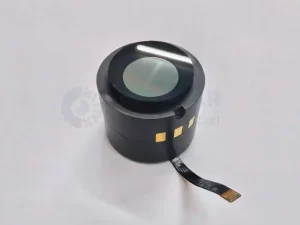

The most critical parameters of an image intensifier tube (I² tube), determine its performance, usability, and suitability for specific applications (e.g., night vision goggles, weapon sights, or aviation systems). These parameters are prioritized based on their impact on image quality, low-light performance, durability, and operational effectiveness. Below is a concise breakdown of the most critical parameters, informed by military standards (e.g., MIL-SPEC) and industry data from manufacturers like L3Harris and NNVT.
1. Figure of Merit (FOM)
- Definition: FOM = Center Resolution (lp/mm) × Signal-to-Noise Ratio (SNR). It’s a composite metric of clarity and low-light performance.
- Why Critical: Higher FOM indicates better image detail and reduced noise (graininess) in low-light conditions, directly affecting target identification and situational awareness.
- Typical Values: 1600–2700+ (e.g., 1800 for standard, 2400+ for high-grade OMNI VIII or Pinnacle tubes).
- Impact: Essential for all use cases; higher FOM is critical for tactical and aviation applications where precision is paramount.
2. Signal-to-Noise Ratio (SNR)
- Definition: Ratio of useful signal to background noise, measured at a standard light input (e.g., 108 μlm/m²).
- Why Critical: Higher SNR means clearer images in extremely low light (e.g., starlight or overcast nights), reducing graininess and improving contrast.
- Typical Values: 21–31+ (e.g., 25 for standard, 28–30 for high-grade tubes).
- Impact: Crucial for low-light environments; low SNR results in noisy, less usable images.
3. Center Resolution (lp/mm)
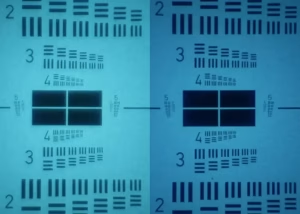
- Definition: Lines per millimeter resolved at the center of the image, typically measured under high-light (108 μlm/m²) and low-light conditions.
- Why Critical: Determines how sharp and detailed the image is, especially for identifying small objects or reading text (e.g., signs).
- Typical Values: 64–72 lp/mm (center, high-light); 36 lp/mm (low-light minimum).
- Impact: High resolution is vital for precision tasks like targeting or navigation; aviation tubes require consistent edge-to-edge resolution.
4. Halo (mm)
- Definition: Size of the glow or bloom around bright light sources (e.g., streetlights), measured in millimeters.
- Why Critical: Smaller halo improves visibility in mixed lighting (urban environments, near artificial lights) by reducing image washout.
- Typical Values: 0.8–1.0 mm (aviation-grade tubes aim for ≤0.8 mm).
- Impact: Critical for urban or aviation use where bright lights are common; large halos obscure nearby objects.
5. Equivalent Background Illumination (EBI)
- Definition: Inherent noise or “background glow” in the tube when no light is present, measured in ×10⁻¹¹ lm/cm².
- Why Critical: Lower EBI allows better visibility in near-total darkness (e.g., caves, dense forests) by minimizing self-generated noise.
- Typical Values: ≤2.5 (lower is better; high-grade tubes approach 1.0–1.5).
- Impact: Essential for extreme low-light scenarios; high EBI degrades starlight performance.
6. Photocathode Sensitivity (μA/lm)
- Definition: Efficiency of the photocathode in converting incoming light (at 2856K) into electrons, measured in microamperes per lumen.
- Why Critical: Higher sensitivity improves performance across all light levels, especially in low-light conditions, enhancing overall tube efficiency.
- Typical Values: 1800–2200+ μA/lm (higher for newer tubes like NNVT GTX864 Class S).
- Impact: Directly affects SNR and FOM; critical for consistent performance.
7. Luminance Gain
- Definition: Amplification of input light to output brightness, measured at low light levels (e.g., 2×10⁻⁶ fc).
- Why Critical: Determines how bright the image appears; too low, and the image is dim; too high, and it risks saturation in mixed lighting.
- Typical Values: 40,000–80,000 (adjustable in manual gain tubes like MX-11769).
- Impact: Autogating (standard in Gen 3) and manual gain options (e.g., MX-11769) ensure versatility in dynamic lighting.
8. Mean Time to Failure (MTTF)
- Definition: Expected operational lifespan of the tube, measured in hours.
- Why Critical: Determines durability and cost-effectiveness, especially for professional or military use where frequent replacement is impractical.
- Typical Values: 10,000–15,000 hours (12,000 average for modern Gen 3).
- Impact: Critical for long-term reliability; shorter lifespans increase maintenance costs.
9. Blemishes and Defects
- Definition: Visual imperfections (e.g., dark spots, chicken wire) in the image, graded by size and zone (center vs. edge).
- Why Critical: Blemishes can distract or obscure critical details, especially in high-stakes scenarios like aviation or combat.
- Typical Values: Military specs limit blemish size (e.g., <0.003 inches) and number per zone; high-grade tubes have near-zero blemishes.
- Impact: Critical for user confidence and performance; aviation tubes have stricter blemish tolerances.
10. Autogating and Gain Control
- Definition: Ability to automatically reduce gain in bright light (autogating) or manually adjust gain (e.g., MX-11769’s pigtail).
- Why Critical: Protects the tube from damage and maintains usability in dynamic lighting (e.g., urban areas with streetlights).
- Typical Values: All Gen 3 tubes are autogated; manual gain (4-pin EGAC) is specific to certain formats like MX-11769.
- Impact: Essential for versatility; manual gain is critical for binoculars or urban operations.
Prioritization by Use Case
- Tactical/Ground (e.g., PVS-14): FOM, SNR, resolution, and halo are top priorities for clarity and mixed-light performance.
- Aviation (e.g., ANVIS): Halo, EBI, blemishes, and edge resolution are critical for safety and navigation.
- Urban/LEO: Gain control (manual preferred), halo, and SNR ensure adaptability to artificial lighting.
- Extreme Low-Light (e.g., caves): EBI, SNR, and photocathode sensitivity dominate for starlight or sub-starlight conditions.
Notes
- Interdependence: Parameters like SNR, resolution, and sensitivity feed into FOM, making it a key summary metric.
- Tube Grades: Manufacturers grade tubes (e.g., OMNI VII/VIII, Pinnacle) based on these parameters, with higher grades offering better specs but higher costs.
- Testing Standards: MIL-SPEC (e.g., MIL-PRF-49427) defines minimums, but actual performance varies by batch and manufacturer (L3Harris, Elbit, Photonis).